Week 6
Minimise disruption, improve governance, and grow confidence in cyber posture
Minimise disruption, improve governance, and grow confidence in cyber posture
As your teams begin to adopt new tools and approaches to work in a faster and more efficient way, the risk of disruption also increases. This might take the form of locked systems that bring business to a standstill, or it might take the form of sensitive data being shared with AI systems in ways that give rise to compliance, legal, and reputational risk.
In each case, the consequences extend well beyond the IT function. Not just about stopping threats. They impact business continuity, decision-making, customer trust, and ultimately the ability of leadership teams to demonstrate control when it matters most and that’s why resilience in today, must be considered through an increasingly broad operational lens.
It’s no longer simply a matter of stopping threats in their tracks, but of understanding how technology is being used, where the risk is building, and how quickly the organisation can respond and recover when things go wrong.
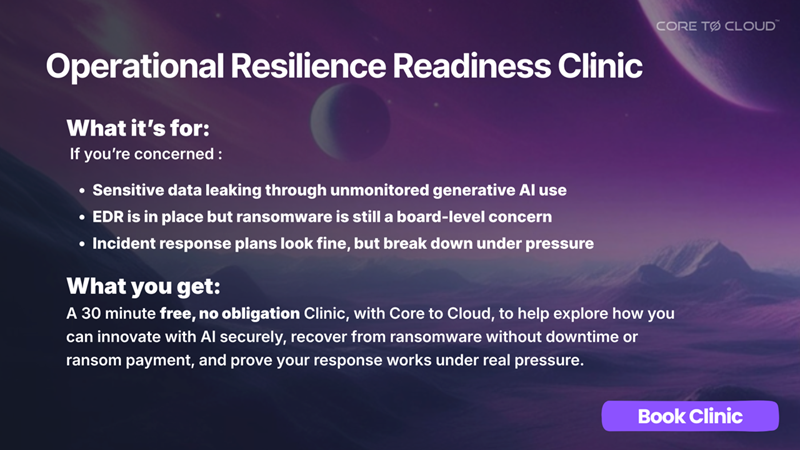
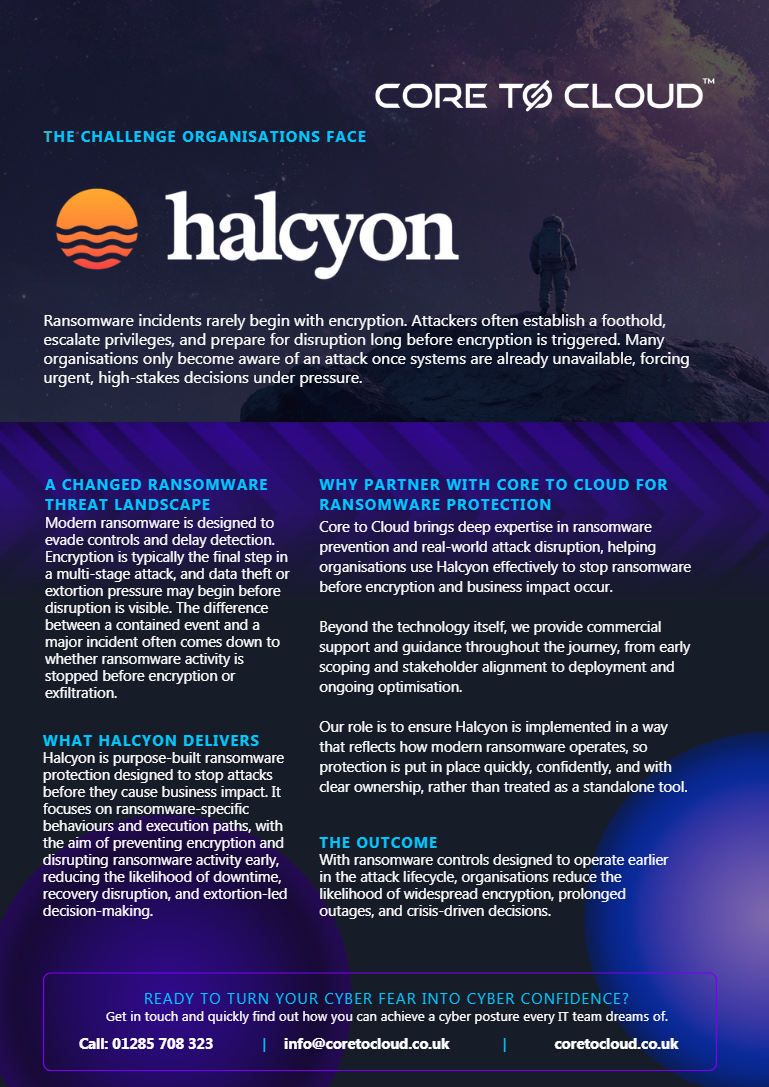
Ransomware incidents rarely begin with encryption. Attackers often establish a foothold, escalate privileges, and prepare for disruption long before encryption is triggered.
Many organisations only become aware of an attack once systems are already unavailable, forcing urgent, high-stakes decisions under pressure.
In this brochure brought to us by Core to Cloud and Harmonic, you’ll discover how this approach can help minimise disruption, improve governance, and give leadership teams the confidence they need in their overall cyber posture.
Let us know what you think about the article.