A practical guide to building an anti-fraud data lake
What to collect, how to structure it, and how to make it usable
What to collect, how to structure it, and how to make it usable
Built correctly, it becomes the heart of detection, investigation, intelligence and regulatory reporting.
When it works as an operational layer rather than a passive repository, teams stop wasting cycles hunting for context and start acting on it. Patterns surface faster, links between identities, devices, transactions and behaviour become clearer, and analysts can move easily from real-time alerts to years of history in seconds.
Because when the same data foundation supports both detection and reporting, you reduce duplication, inconsistency and blind spots across the entire fraud lifecycle.
A strong anti-fraud data lake includes:
Collect data across:
Standardise formats, enrich entities and resolve identities so that a single customer, device or mule can be recognised across all systems.
Elastic’s index structure allows teams to search across any data, even without predefined schema, significantly reducing engineering overhead.
The lake must function as both a detection and an investigation engine, linking past and present behaviour.
Fraud, AML, cyber and identity teams must access the data lake without stepping on each other’s workflows.
When all of these come together, the data lake becomes a living system — powering models, supporting investigations, and continuously improving organisational fraud intelligence.
When this foundation is in place, the value compounds quickly. Every new signal strengthens existing models, and every investigation enriches future detection. Teams stop operating in narrow lanes and start sharing a common view of risk that adapts as fraud tactics evolve.
The result is not just faster response, but a smarter organisation, one where data, context and action flow together, and where fraud controls become progressively sharper with every case handled.
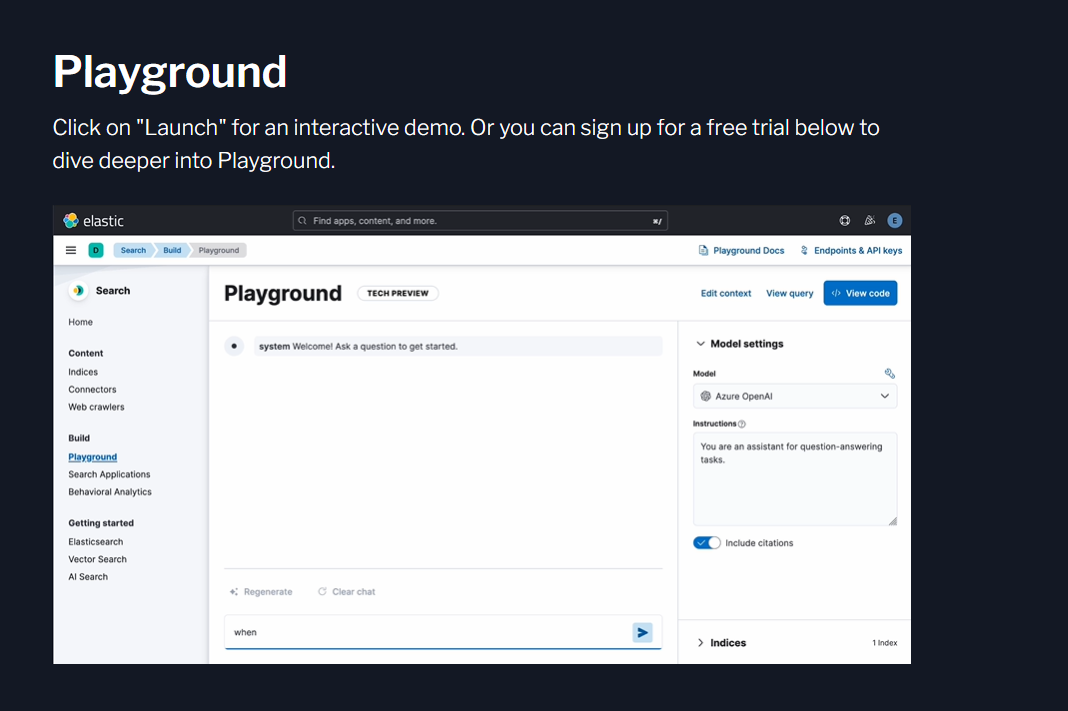
Test the latest AI search capabilities with AI Playground, now in Elasticsearch.
Ingest your own data or use our sample data to explore how to build RAG systems, test different LLMs from various providers like OpenAI, Amazon Bedrock, Anthropic and more.

How slow ingestion creates speed traps and blind spots.

Why better models don’t matter until the data problem is fixed.

Why incidents cost up to 20× more than their value.

Checklist for leaders in fraud, risk & financial crime.

How to modernise a legacy fraud stack without disruption.

Quantified benefits from modern fraud stacks.

How high-growth banks and PSPs reduce operational drag.

How search-led AI changes fraud detection.

The case for a composable architecture.

Why enrichment, correlation and context change everything.

What a unified fraud data hub looks like.

Let us know what you think about the article.